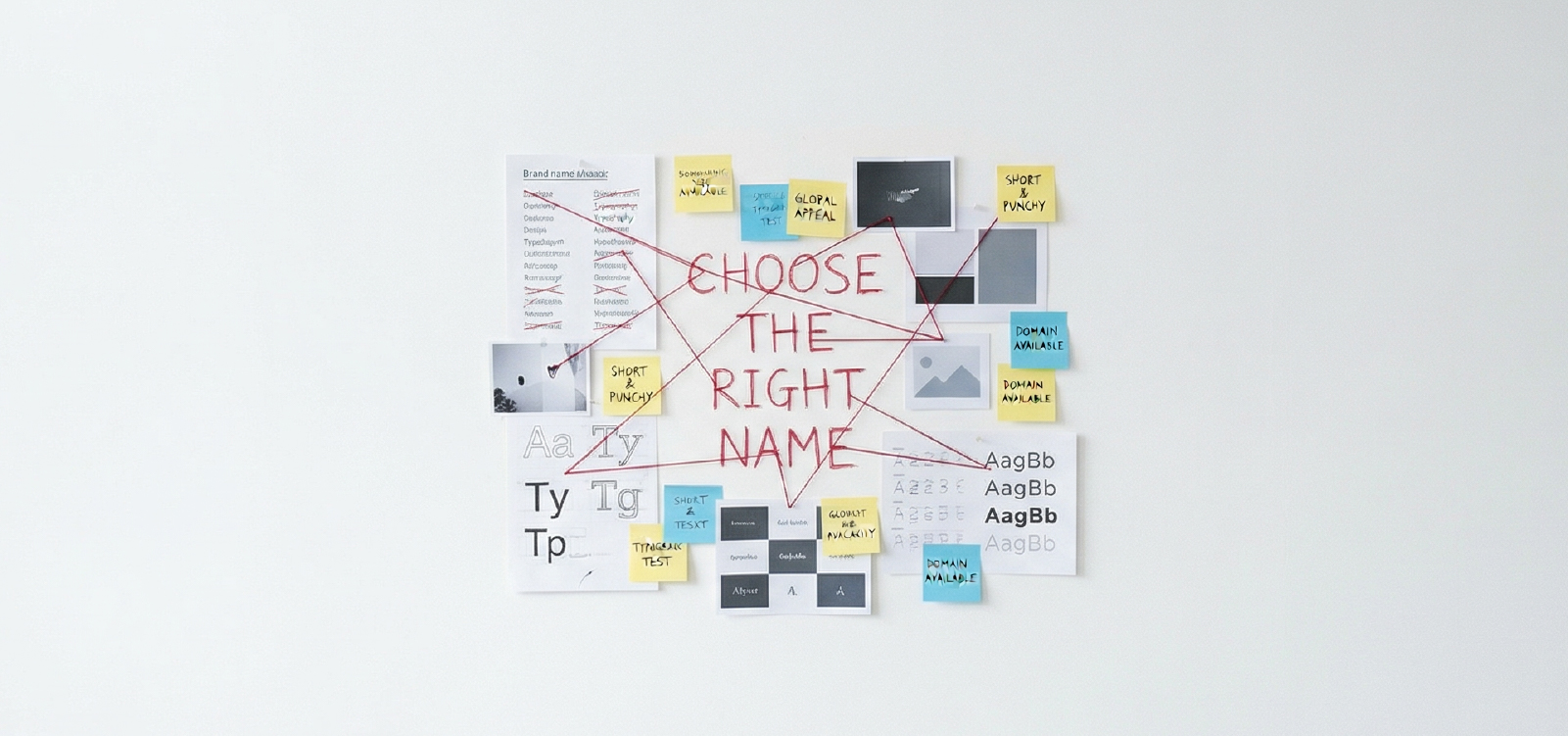
Introduction
A brand name is not something you “like”.
It’s not something that “sounds cool”.
A name is a strategic decision.
It has meaning, positioning, legal impact, and long-term consequences.
Your name must match:
This article helps you understand how to choose a name properly, before falling in love with one too quickly.
Your name depends on the type of brand you are creating
You cannot name a freelance activity the same way you name:
The naming logic changes depending on what the brand is meant to do.
→ See: Types of brands and their objectives
Your name must reflect the nature of the structure you are building.
Meaning first, sound second
A good name:
A name that only “sounds nice” often becomes limiting later.
Ask yourself:
Different naming approaches
There are several ways to create a brand name:
→ See: Case studies of brand naming strategies
Understanding these approaches helps you choose the right direction instead of guessing.
Before you get attached: check availability
This is where most people make mistakes.
They fall in love with a name… that is already taken.
Before validating any name, you must check:
Online presence :
Legal databases (trademarks) :
You must verify if the name is already registered as a trademark.
Main databases to check:
These databases allow you to see:
→ See: How to search in trademark databases
→ See: Branding — Legal & Jurisdiction basics
Understanding classifications (Nice Classification)
A name might be available in one category but not in another.
For example:
You must understand what you are legally allowed to do with that name depending on your activity.
→ See: Introduction to Nice Classification
What you are not allowed to do
There are rules when choosing a name:
You cannot:
This also applies to:
→ See: Branding — Legal & Jurisdiction
Think long term
Your name should allow:
A good name is flexible.
Conclusion - Don’t rush the name
Choosing a name is not a creative rush.
It’s a strategic, legal, and conceptual decision.
Take your time.
Test it.
Check it.
Project it into the future.
Your name is the first brick of your brand’s existence.
Note
This article is an introduction to the naming process.
Each part (naming strategies, legal checks, databases, classifications) will be explored in depth in dedicated modules and detailed articles later on.